
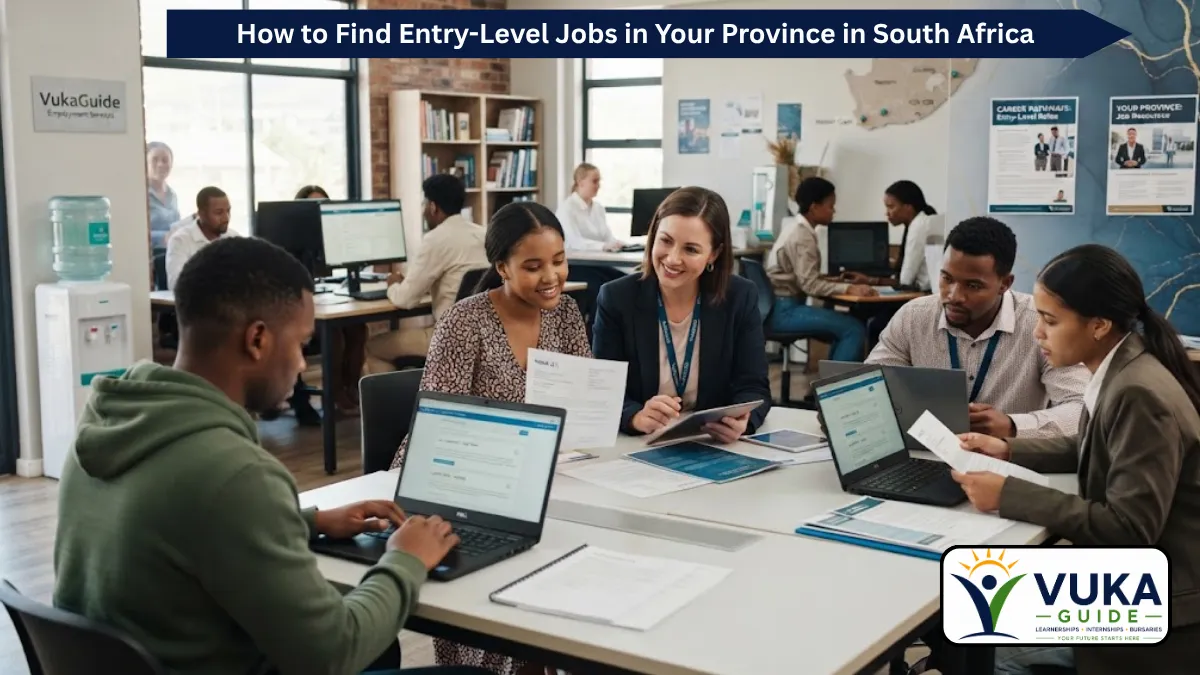
Finding an entry-level job can be difficult, especially if you have limited or no previous work experience. However, South African job seekers have several ways to discover vacancies in their province, including government recruitment portals, Employment Services South Africa, company career websites and reputable employment platforms.
The most effective approach is to search consistently, understand the requirements of each vacancy and apply through the correct official channel.
Quick Guide
| What to Check | What to Do |
|---|---|
| Province | Search for opportunities available in your province, city or district |
| Qualification | Look for Grade 10, Grade 12, certificate, diploma or degree opportunities |
| Experience | Prioritise vacancies that do not require previous experience |
| Documents | Keep your CV, ID and relevant qualifications ready |
| Application | Follow the employer’s exact application instructions |
| Closing Date | Submit your application before the stated deadline |
What Are Entry-Level Jobs?
Entry-level jobs are positions intended for people who are starting their careers or have limited professional experience.
Depending on the employer and industry, these positions can include general workers, administrative assistants, receptionists, retail assistants, clerks, customer service representatives, cleaners, trainees and other junior roles.
Some entry-level vacancies require only Grade 12, while others require a certificate, diploma, degree or specific technical qualification.
Having no previous employment history does not automatically mean that you cannot apply. Read the vacancy carefully and determine whether previous experience is a compulsory requirement.
Start With Your Provincial Government
One of the most useful places to search for public-sector opportunities is your provincial government’s official website.
The South African Government publishes Public Service Vacancy Circulars containing national and provincial government vacancies. These circulars are generally published weekly, apart from periods such as December.
Job seekers should check the vacancies that apply to their province and compare the requirements with their qualifications.
Provincial government websites may also publish vacancies, internships, learnerships and other employment-related programmes separately.
For example, job seekers in Limpopo can check the provincial government’s official Jobs and Career Opportunities information and its recruitment channels for available opportunities.
The important lesson is to use official government recruitment sources instead of depending entirely on social media posts or forwarded messages.
Use Employment Services South Africa
Employment Services South Africa, commonly known as ESSA, is another useful resource for people looking for work.
The Department of Employment and Labour’s employment services system allows work seekers to register their details, capture information about their skills and qualifications and search for employment opportunities.
Registered work seekers may also be considered for potential employment matches.
Creating a profile can therefore be useful if you are actively looking for work and want to make your information available through an official employment service.
Keep your information updated and ensure that your qualifications, contact details and other information are accurate.
Search by Province, City and District
Searching for simply “jobs in South Africa” can produce a very large number of results.
A more focused search can help you identify opportunities that are more relevant to where you live.
Examples include:
- Entry-level jobs in Limpopo
- Grade 12 jobs in Limpopo
- Entry-level jobs in Gauteng
- Admin jobs in KwaZulu-Natal
- General worker jobs in Mpumalanga
- Retail jobs in the Western Cape
- Graduate jobs in the Eastern Cape
- Entry-level jobs in North West
- Government jobs in the Free State
- Jobs in the Northern Cape
You can make your search even more specific by adding your town, municipality or district.
For example, instead of searching for only “entry-level jobs in Limpopo”, you could search for opportunities in Polokwane, Thohoyandou, Tzaneen, Giyani or another area relevant to you.
Look Beyond Permanent Jobs
Your job search should not be limited to permanent positions.
If you are struggling to find a permanent entry-level position, consider other opportunities that can help you gain practical experience.
These may include:
- Internships
- Learnerships
- Apprenticeships
- Graduate programmes
- Temporary jobs
- Contract positions
- Training programmes
- Work-integrated learning opportunities
An internship or learnership can provide practical exposure and help strengthen your CV.
Some programmes may also provide a stipend, although the amount and conditions vary between organisations.
Always read the official advertisement to confirm the programme’s requirements, duration, location and financial benefits.
Check the Requirements Before Applying
Do not apply based only on the job title.
Read the complete vacancy advertisement and check whether you meet the minimum requirements.
Pay particular attention to:
- Minimum education level
- Required qualification
- Previous work experience
- Age requirements, where applicable
- Citizenship requirements
- Location
- Computer skills
- Driver’s licence requirements
- Professional registration
- Language requirements
- Required documents
If a vacancy states that a specific qualification is compulsory, do not assume that a different qualification will automatically be accepted.
Focus on opportunities where your actual qualifications and experience meet the stated minimum requirements.
Prepare Your CV Before You Start Searching
Having an updated CV ready can make it easier to apply quickly when a suitable vacancy is advertised.
Your CV should normally contain:
- Full name and contact details
- Education
- Relevant qualifications
- Skills
- Work experience, if applicable
- Volunteering or community experience
- Internships or practical training
- Relevant certificates
- References, where appropriate
If you have limited employment experience, you can still present your education, practical training, projects, volunteering and relevant skills clearly.
Most importantly, keep your CV truthful. Never add qualifications, employment history or skills that you do not have.
Keep Your Documents Ready
Many vacancies require supporting documents.
Depending on the employer, you may need:
- Updated CV
- Copy of your ID
- Qualification certificates
- Academic record
- Professional registration documents
- Driver’s licence
- Application form
- Other documents specified in the vacancy advertisement
Government vacancies can have specific application requirements, so read the official advertisement carefully before submitting your application.
Avoid sending unnecessary documents if the employer has not requested them.
Apply Through the Correct Channel
Following the correct application process is one of the most important parts of a successful job search.
An employer may require you to:
- Complete an online application.
- Register on a recruitment portal.
- Submit your CV by email.
- Complete a government application form.
- Apply through an official careers website.
- Upload documents in a specified format.
For certain South African public-service vacancies, applicants may be required to complete the prescribed Z83 application form.
Do not automatically send your CV to an email address found in a social media post or WhatsApp message.
Instead, verify the vacancy through the official employer or government website and follow the application instructions published there.
Keep Track of Closing Dates
A good opportunity can be missed simply because an applicant forgets the deadline.
Create a simple record for every vacancy you want to apply for.
Record:
- Employer
- Job title
- Reference number
- Closing date
- Application link
- Date you applied
- Application status
Check the closing date before submitting your application.
Where possible, avoid waiting until the final day because technical problems, missing documents or high application volumes can create unnecessary pressure.
Be Careful of Job Scams
Job seekers should be cautious when receiving employment offers through unofficial channels.
Be particularly careful if someone asks you to pay money to secure a job, guarantee employment or obtain an interview.
Before applying, verify:
- The organisation’s name
- The advertised position
- The official website
- The application process
- The contact details
- The closing date
- Whether the vacancy appears on an official recruitment channel
When possible, submit applications directly through the employer’s official careers page or an official government recruitment platform.
Never share sensitive personal or financial information simply because someone claims to be recruiting you.
Create a Weekly Job Search Routine
Consistency can make your job search more organised.
A simple weekly routine could look like this:
Monday: Check national and provincial government vacancies.
Tuesday: Search company career pages and entry-level positions.
Wednesday: Look for internships, learnerships, apprenticeships and training programmes.
Thursday: Improve your CV and apply for suitable opportunities.
Friday: Review closing dates and update your application tracker.
You can also spend a short amount of time each day checking newly published vacancies.
The goal is not to apply for everything. The goal is to consistently identify genuine opportunities that match your qualifications and circumstances.
Final Advice
Finding entry-level jobs in your province requires patience, organisation and regular searching.
Start with official provincial government websites, Public Service Vacancy Circulars, Employment Services South Africa and company career pages. You can then expand your search to reputable employment platforms and organisations operating in your area.
Do not become discouraged if your first applications are unsuccessful. Use each application as an opportunity to improve your CV, understand employer requirements and identify areas where you can develop additional skills.
If you do not yet qualify for your preferred job, consider internships, learnerships, apprenticeships or training programmes that could help you gain practical experience.
Your first opportunity does not have to be your final career destination. It can be the first step towards developing experience, skills and a longer-term career.
Frequently Asked Questions
Where can I find entry-level jobs in my province?
Start with your provincial government’s official vacancies page, South African Government Public Service Vacancy Circulars, Employment Services South Africa and official company career websites.
Can I find jobs if I only have Grade 12?
Yes. Some entry-level positions accept applicants with Grade 12, although requirements differ between employers and individual vacancies.
Do I need previous work experience?
Not always. Some entry-level positions, internships, learnerships and training programmes are designed for people who are starting their careers. Always check the individual vacancy requirements.
Should I apply for jobs outside my province?
You can consider opportunities in other provinces if you are able and willing to relocate. However, searching locally first can help you identify opportunities that are more practical for your circumstances.
Is it safe to pay someone to get me a job?
Be extremely cautious. Do not pay someone simply because they claim they can guarantee employment. Verify the opportunity and use the employer’s official application process.
Expert Guidance
A successful job search is about more than sending hundreds of applications.
Keep your CV updated, maintain a record of applications and regularly check official recruitment sources. When you find a vacancy, read the requirements carefully before applying and make sure every document you submit is accurate.
If you are not yet eligible for a particular position, look for internships, learnerships, apprenticeships or training programmes that could help you gain the required experience or qualification.
It is also useful to build a habit of checking opportunities regularly rather than searching only when you urgently need a job.
Most importantly, remain patient and consistent. Building a career takes time, and an entry-level opportunity can provide valuable experience that helps you progress towards future positions.
Disclaimer
This guide is provided for general career information. Vacancy requirements, application procedures and closing dates can change without notice. Always verify the latest information with the official employer or government recruitment source before applying.
VukaGuide is not the recruiting organisation and does not charge applicants application fees.
Trust Signals
Written by: VukaGuide Editorial Team
Reviewed by: VukaGuide Editorial Team
Published: 25 August 2026
Last Updated: 25 August 2026
Reading Time: 5–6 min read
Sources:
- South African Government Public Service Vacancy Circulars
- Department of Employment and Labour – Public Employment Services
- Employment Services South Africa (ESSA)
- Provincial government recruitment websites
Editorial Review:
This article has been reviewed for accuracy using official government employment sources and is intended to provide practical guidance to South African job seekers.
Discover Relevant VukaGuide Resources Covering:
- Latest Entry-Level Jobs
- Government Jobs
- Learnerships
- Internships
- Graduate Programmes
- Apprenticeships
- Bursaries
- CV Writing Guides
- Interview Preparation
- Career Advice

About
Mokoena
Puseletso Mokoena is a Vukaguide contributor who writes practical and informative content for South African job seekers, students, graduates and young professionals.
Puseletso covers employment opportunities, learnerships, internships, bursaries, education, skills development and career guidance. The focus is on making opportunity information easier to understand and helping readers navigate application requirements and processes.
Vukaguide articles by Puseletso Mokoena are written with a focus on clear, useful and factual information, with opportunity details checked against available source information where possible.