
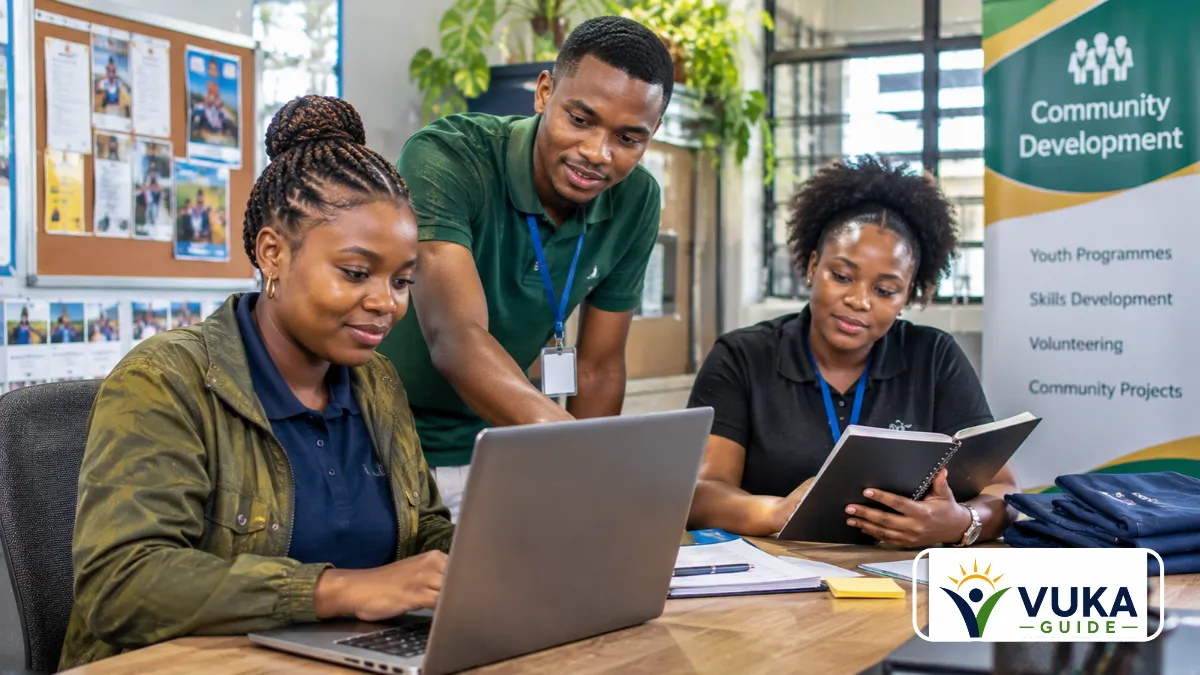
You do not always need a formal job to start building professional experience. Community organisations and non-governmental organisations (NGOs) can provide opportunities to develop practical skills, contribute to meaningful projects and meet people working in different fields.
For young South Africans who have recently completed Matric, are studying at university or TVET college, or are looking for their first job, volunteering can be one way to gain experience outside the classroom.
Depending on the organisation and its needs, volunteers may assist with communications, social media, event coordination, administration, research, education support, community development and environmental activities.
These experiences can become valuable additions to a CV or portfolio when they involve real responsibilities and documented contributions.
However, not every NGO offers formal internships or paid employment. Before joining, find out whether the opportunity is voluntary, whether expenses are covered, what duties are involved and whether the organisation can provide appropriate supervision.
This guide highlights South African organisations and platforms worth investigating, including examples in Limpopo and other provinces.
1. Why volunteering with an NGO can help your career
An NGO often works with communities to address social, educational, environmental, economic or development challenges.
These organisations may need support with activities that require practical skills. A volunteer who understands graphic design, writing, photography, administration or digital communication may be able to contribute to an organisation’s work.
For example, someone interested in journalism could ask whether an organisation needs help preparing approved community newsletters. A person interested in marketing could investigate opportunities to support an awareness campaign.
Volunteering may help you develop:
- Communication and teamwork skills.
- Digital content creation.
- Writing and research experience.
- Event planning and coordination.
- Administration and record-keeping.
- Project support and problem-solving.
- Professional references, where earned and appropriate.
- Connections with people working in your preferred industry.
The value comes from what you actually do, not simply from having an NGO’s name on your CV.
2. Local organisations in Limpopo to investigate
Young people in Limpopo can start by researching organisations working in their communities and nearby municipalities.
The following organisations publish information about their programmes or ways to get involved. Contact them directly to confirm whether they currently accept volunteers, which activities are available and what their age requirements are.
Up2Speed — Youth development and digital skills
Up2Speed is a youth development organisation in Limpopo that focuses on education, technology, entrepreneurship and skills development.
Its published volunteer page identifies several areas where volunteers may contribute:
- Mentoring young people.
- Supporting coding and robotics clubs.
- Providing career-guidance talks.
- Assisting with youth events and community outreach.
- Supporting youth summits and graduation ceremonies.
The organisation states that most volunteer roles require approximately four to eight hours per month for at least three months. Its published information describes these positions as unpaid, with travel potentially reimbursed for in-person events.
Portfolio opportunities: Event support, educational activities, presentation skills, mentoring-related experience where appropriately qualified and supervised, and technology-related community projects.
Visit the Up2Speed volunteer page to investigate its requirements.
FourNomads NPC — Education and youth development
FourNomads NPC works in youth development and education, with a focus on helping children access opportunities regardless of where they are born.
The organisation lists addresses in Louis Trichardt and Centurion and provides a volunteer contact route on its website.
Young people interested in education, community development, programme support or social-impact work can contact the organisation to ask whether suitable volunteer opportunities are available.
Portfolio opportunities to ask about: Event assistance, approved communications activities, programme administration and education-related project support.
The website does not guarantee a particular volunteer position, so applicants should request details about current needs and age requirements.
Visit FourNomads.
HDF Development — Youth and community programmes
HDF Development is a community-based NPO operating in Limpopo, with a focus on youth development in rural communities such as Bungeni and surrounding areas.
Its published programme areas include:
- Youth development.
- Education support.
- Early intervention.
- Women empowerment.
The organisation invites people interested in volunteering, partnership and community support to contact its team.
Portfolio opportunities to ask about: Community project assistance, approved awareness activities, education support and event administration.
Young people should contact HDF Development to establish whether it has suitable supervised opportunities and what skills it needs.
Visit HDF Development.
Enock Mathebula Foundation — Communications and community projects
The Enock Mathebula Foundation is based in Phalaborwa, Limpopo, and publishes a volunteer application process.
Its volunteer form allows applicants to indicate interest in areas such as:
- Education support and mentorship.
- Youth leadership and empowerment.
- Skills development and training.
- Events.
- Media, communications and storytelling.
- Administration and logistics.
- Poverty-relief activities.
The foundation’s published volunteer form states that participation is unpaid.
Portfolio opportunities: Approved event coverage, communications support, storytelling, administration and project assistance.
This organisation may be worth investigating for young people interested in communications, content creation and community development. Ask what activities are appropriate for your age and experience before applying.
Visit the Enock Mathebula Foundation volunteer page.
EMISSC — Community development in Giyani
EMISSC is a social protection organisation based in Giyani, Limpopo.
Its published volunteer information identifies roles in areas including administration, communications support, community outreach, skills facilitation and peer education.
It also describes work with schools, municipalities, community organisations and other NPOs.
Portfolio opportunities to ask about: Administrative support, approved communications tasks, event coordination and community campaign assistance.
Some activities, particularly counselling, social work and peer education, may require qualifications, training, screening or specific supervision. Young people should not take on these responsibilities without the organisation’s approval and appropriate preparation.
Visit EMISSC’s Get Involved page.
3. National organisations and volunteering platforms
You do not have to limit your search to organisations in your municipality. Some organisations have national networks or publish opportunities in several provinces.
UNICEF South Africa Volunteer Programme
UNICEF South Africa has a youth-driven volunteer programme focused on children’s rights and social change.
Its published programme describes activities in areas such as:
- Education and literacy.
- Child protection and ending violence against children.
- Climate action and environmental awareness.
- Youth advocacy and community engagement.
UNICEF reports that its volunteer network has expanded across public universities and all nine provinces.
Students interested in joining can investigate whether there is a volunteer club at their institution. The organisation also provides information for people interested in starting a club at a university.
Portfolio opportunities: Advocacy activities, campaign planning, event participation, teamwork and project coordination.
Visit the UNICEF South Africa Volunteer Programme.
Greenhouse — Environment and community development
Greenhouse is a registered South African nonprofit organisation based in Marina da Gama, Cape Town.
Its volunteer page welcomes people with different skills and interests, including:
- Education.
- Gardening.
- Social media.
- Fundraising.
- Photography.
- Administration.
- Graphic design.
- Event organisation.
- Community facilitation.
The organisation’s published information describes a commitment of six to ten volunteer hours per week and a minimum stay of two weeks for its Cape Town volunteer arrangement.
Portfolio opportunities: Environmental activities, approved social media content, photography, design and event support.
Because this programme is based in Cape Town and includes a minimum-stay arrangement, applicants should carefully check travel, accommodation, costs and eligibility before making commitments.
Visit Greenhouse’s volunteer page.
forgood — Find volunteering opportunities across South Africa
forgood is a platform that connects people with organisations seeking volunteer support.
It allows users to explore opportunities based on location, interest and whether the activity is in person or virtual.
Its published listings include examples of work involving:
- Marketing and communications.
- Photography and videography.
- Fundraising support.
- Education assistance.
- Community projects.
- Environmental activities.
- Administration.
- Event support.
This can be useful if you want to build a particular skill rather than simply volunteer wherever an opening is available.
For example, someone interested in content creation can look for organisations requesting photography or communications support.
Listings change, and an opportunity appearing on the platform does not mean it will remain available. Check the current listing and confirm details with the organisation.
Visit forgood’s volunteering platform.
4. Choose an NGO based on the portfolio you want to build
Not every volunteering opportunity will help you develop the same professional skills.
Before contacting an organisation, consider the career field you want to explore.
| Career interest | NGO activities to investigate | Portfolio evidence |
|---|---|---|
| Journalism and writing | Newsletters, approved interviews, research and storytelling | Published articles or approved writing samples |
| Digital marketing | Social media campaigns and content planning | Approved campaign examples |
| Graphic design | Posters, event materials and information graphics | Design samples |
| Administration | Filing, spreadsheets and event records | Anonymised work samples and task descriptions |
| Events management | Registration, planning and coordination | Event reports and approved photographs |
| IT and technology | Digital literacy and supervised technology projects | Project summaries and demonstrations |
| Education | Learning-material preparation and approved tutoring support | Sample resources and activity summaries |
| Environmental work | Clean-ups, awareness and sustainability projects | Project reports and activity records |
Choose opportunities that allow you to develop skills relevant to your career goals.
5. How to approach an NGO when you have no experience
You do not need to wait until an organisation advertises a formal volunteer position before making a professional enquiry.
Start by visiting its official website and learning about its mission, programmes and community activities.
Then prepare a short message explaining:
- Who you are.
- What you are studying or interested in.
- Which skills you can contribute.
- Which type of volunteer activity interests you.
- How much time you may be able to offer.
You can use the following message as a starting point:
Example volunteer enquiry
Good day,
My name is [Your Name], and I am interested in gaining practical experience in [your field of interest].
I came across your organisation and would like to learn whether you currently have suitable volunteer opportunities.
I am particularly interested in assisting with [communications, administration, event support, digital content or another relevant area]. I am willing to learn and contribute responsibly to activities that match my skills.
Could you please advise whether you accept volunteers, what the requirements are and whether there are opportunities suitable for someone at my level of experience?
Thank you for your time.
Kind regards,
[Your Name]
Personalise the message for each organisation. Avoid sending identical messages to dozens of organisations without researching their work.
6. Turn volunteering into a real professional portfolio
A portfolio is a collection of evidence showing what you can do.
It is not simply a list of organisations you have visited or activities you have attended.
If you help an NGO with communications, for example, you could keep copies of approved designs, campaign plans, writing samples or reports.
If you assist with an event, you could record your responsibilities, the tasks completed and the skills developed.
Your portfolio may include:
- Approved posters and graphic designs.
- Published articles or newsletters.
- Social media content you created.
- Event-planning documents.
- Project summaries.
- Research assignments.
- Website or digital-content samples.
- Certificates of participation.
- References or confirmation of your responsibilities, where appropriate.
For every project, record:
Project: What was the activity?
Your role: What were you responsible for?
Your contribution: What did you actually complete?
Skills developed: What did you learn?
Evidence: What approved work sample can you include?
For example:
“Supported a community awareness campaign by preparing approved social media graphics and assisting with event administration.”
This communicates a practical contribution more effectively than simply writing “volunteered at an NGO”.
7. Build professional relationships while volunteering
An NGO can introduce you to people working in different areas, including education, communications, social development, administration and project management.
However, networking should happen naturally through responsible participation.
You can build professional relationships by:
- Being reliable and arriving when expected.
- Communicating respectfully with supervisors.
- Asking appropriate questions about the organisation’s work.
- Learning from experienced volunteers and staff.
- Taking responsibility for agreed tasks.
- Participating in suitable team activities.
- Thanking people who provide guidance.
- Asking for feedback on completed work.
If you work well with a supervisor, you can later ask whether they would be comfortable providing a reference or confirming your responsibilities.
Do not assume that volunteering automatically entitles you to a reference or job recommendation. These should be earned through your contribution.
8. Questions to ask before accepting a volunteer position
Before agreeing to volunteer, make sure you understand the arrangement.
Ask the organisation:
- What will my responsibilities be?
- Who will supervise me?
- How many hours are expected?
- Is the position unpaid?
- Are transport or meal costs covered?
- Is training provided?
- Will I receive confirmation of my participation?
- Can I use approved work samples in my portfolio?
- Are there age requirements?
- What safeguarding and privacy rules apply?
Get the important arrangements in writing where possible.
Be cautious if an organisation expects extensive unpaid work without clear duties, supervision or an explanation of how volunteers are supported.
9. Protect your safety and the organisation’s information
Volunteering should be a safe and respectful experience.
Before sharing personal documents or accepting a placement, check that the organisation is genuine and that you understand how your information will be used.
You should also:
- Verify the organisation’s contact details.
- Confirm the location of activities before attending.
- Tell a trusted adult where you will be volunteering.
- Avoid paying someone to guarantee a volunteer placement.
- Never share passwords or banking details.
- Ask permission before publishing photographs or project information.
- Do not include beneficiaries’ private information in your portfolio.
If a project involves children, people receiving health services or other vulnerable community members, follow the organisation’s safeguarding rules. Do not independently photograph, interview, mentor or provide services to beneficiaries without proper authorisation and supervision.
For anyone under 18, suitable activities should be approved by a parent or guardian and supervised by the organisation. Some volunteer roles have minimum-age requirements or require screening and training.
10. How to find more local NGOs in your province
The organisations listed in this guide are examples, not a complete directory of South African NGOs.
You can discover more organisations through the National Development Agency’s Civil Society Organisation Footprint.
The NDA provides information about civil society organisations in different provinces and municipalities, including organisations working in youth development, education, environmental activities and community support.
For example, its Limpopo footprint lists organisations across municipalities in the Vhembe, Mopani, Capricorn and other districts.
Use the National Development Agency’s Limpopo CSO directory to explore organisations in your area.
Remember that appearing in a directory does not confirm that an organisation currently has volunteer openings. Contact the organisation and check its current activities before making arrangements.
Suggested for VukaGuide
- How to Connect With South African Recruiters When You Have Zero Experience
- How to Register and Legalise Your Street Food or Spaza Business in South Africa
- 10 Low-Capital Businesses You Can Start With Under R1,000 in South Africa
- A Step-by-Step Guide to Monetising Content Creation in South Africa
- Top Free Tech Bootcamps in South Africa: Programmes With Internship and Career Pathways
- Skills Development Opportunities for South African Youth
- Online Learning Opportunities for Unemployed Youth in South Africa
- How to Choose an Accredited Course in South Africa: A Guide for Students and Job Seekers
- Short Courses That Can Help You Develop Workplace Skills in South Africa
- National Open Learning System (NOLS): Free Online Courses in South Africa
- Free Online Courses in South Africa: Where to Study for Free
Frequently asked questions
Can I volunteer at an NGO without work experience?
Yes. Some organisations welcome people who are willing to learn and contribute time or skills. The available duties depend on the organisation, the role and its eligibility requirements.
Can volunteering help me get a job?
Volunteering can help you develop practical skills, demonstrate initiative and meet people working in different fields. It does not guarantee employment, but relevant experience may strengthen your CV.
Can I use NGO work in my professional portfolio?
Yes, where the organisation gives permission and the material does not reveal confidential information. Keep approved work samples and describe your actual contribution accurately.
Do NGOs pay volunteers?
Many volunteer positions are unpaid. Some organisations may reimburse approved expenses, while formal internships or employment programmes may have different conditions. Always confirm the arrangement before accepting a position.
Which NGO activities are useful for a communications career?
You can investigate opportunities involving approved social media content, photography, newsletters, event communications, campaign support and storytelling.
How do I know whether an NGO is legitimate?
Check its official website and contact information, ask for its registration details where relevant, and verify its NPO status through the appropriate government channels. Be cautious of organisations demanding payment for access to volunteer opportunities.
Can school learners volunteer?
Some organisations may accept school learners for suitable supervised activities, while others have minimum-age requirements. A learner should obtain permission from a parent or guardian and confirm the organisation’s safeguarding arrangements before participating.
Final reminder
You do not have to wait for your first formal job to start developing practical skills and building a professional portfolio.
Local NGOs and community organisations can provide opportunities to contribute to real projects, learn from experienced people and understand how organisations operate.
Start by identifying your interests, researching organisations in your area and asking about suitable volunteer activities. Choose a role where you can make a genuine contribution and keep evidence of the work you complete with permission.
A strong portfolio is built through real work, responsible participation and documented contributions—not simply by collecting volunteer certificates.
Official and supporting sources
- UNICEF South Africa — Volunteer Programme: Youth-led volunteer network, programme focus areas and university club participation. Read more. UNICEF South Africa
- Up2Speed — Volunteer: Published volunteer roles, time commitments and unpaid status. Read more. up2speed.org.za
- Enock Mathebula Foundation — Get Involved: Volunteer application form and areas including media, communications, storytelling and administration. Read more.
- FourNomads NPC: Organisation information, locations and volunteer contact route. Read more. Youth Development in South Africa
- HDF Development: Limpopo-based youth and community development organisation. Read more. Youth & Community NPO
- EMISSC — Get Involved: Volunteer and community partnership information. Read more. EMISSC
- Greenhouse — Volunteer: Volunteer skills areas, Cape Town location and programme requirements. Read more.
- forgood — Volunteer: Searchable volunteering opportunities across South Africa. Explore opportunities.
- National Development Agency — Limpopo CSO Footprint: Provincial civil society organisation directory. Explore the directory

About
Mokoena
Puseletso Mokoena is a Vukaguide contributor who writes practical and informative content for South African job seekers, students, graduates and young professionals.
Puseletso covers employment opportunities, learnerships, internships, bursaries, education, skills development and career guidance. The focus is on making opportunity information easier to understand and helping readers navigate application requirements and processes.
Vukaguide articles by Puseletso Mokoena are written with a focus on clear, useful and factual information, with opportunity details checked against available source information where possible.
1 thought on “How to Use NGO Volunteering to Build Your Portfolio and Professional Network”